
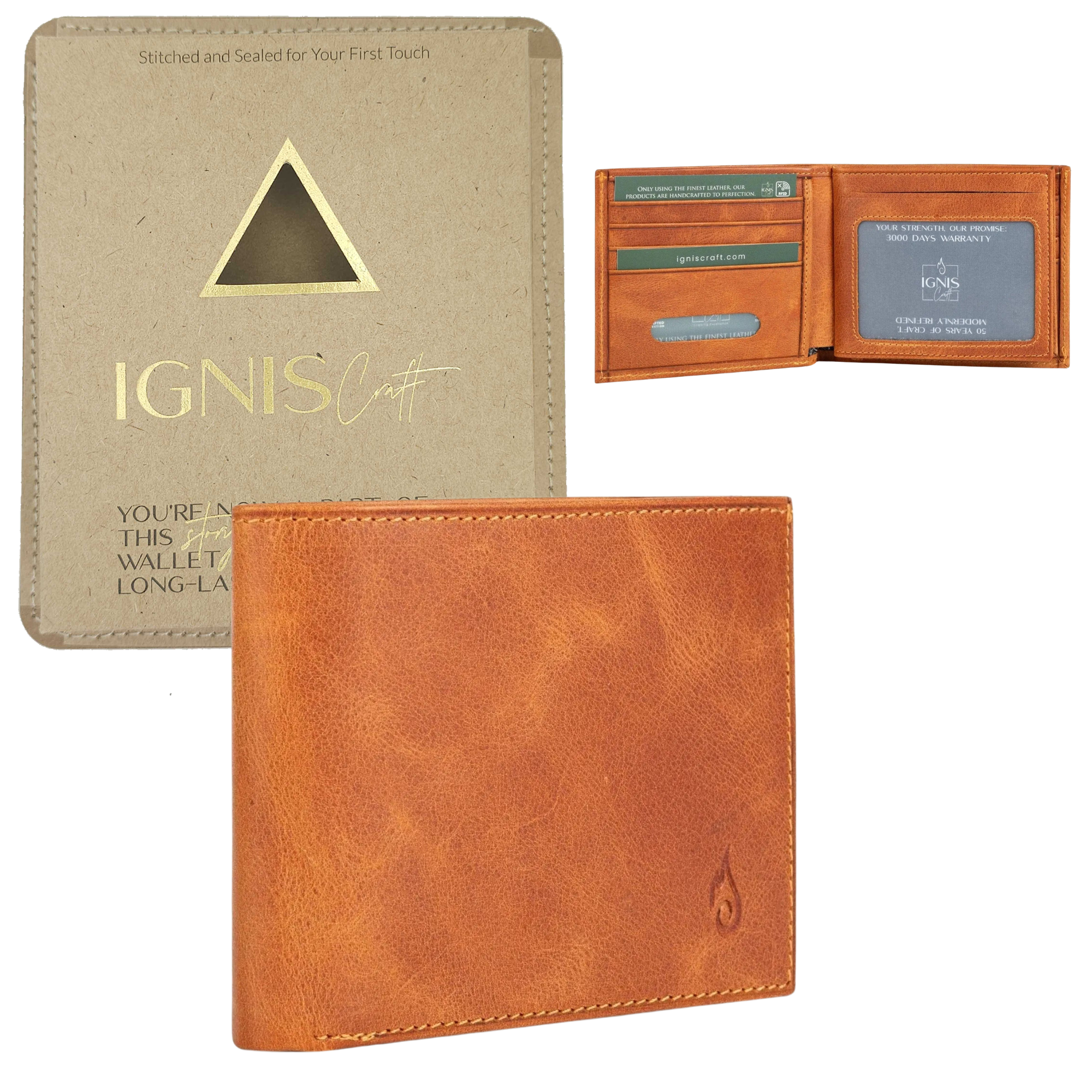
A good leather wallet needs far less care than most guides suggest. The common mistakes are doing too much — conditioning every month, scrubbing with the wrong products, drying it on a radiator. This is the routine we give people who buy from our workshop, and it is short on purpose.
The everyday habits that matter most
- Do not overfill it. This does more damage than anything else. Leather stretches to what you put in it and does not fully shrink back. A wallet crammed for a month stays loose afterwards.
- Take it out of your back pocket when you sit. Sitting on a wallet bends the spine the wrong way thousands of times a year. That is where bifolds fail first.
- Keep it away from direct heat. Car dashboards and radiators dry the oils out of leather and can make it crack.
- Let it breathe. Leather is a skin. Storing a wallet sealed in a plastic bag traps moisture and can cause mould.
How to clean a leather wallet
For everyday dirt, a soft dry cloth is enough. Wipe with the grain, not in circles.
For marks that a dry cloth will not lift:
- Empty the wallet completely.
- Dampen a soft cloth with plain water and wring it out until it is barely damp.
- Wipe the whole panel evenly, not just the mark — spot-cleaning one area can leave a lighter patch.
- Let it dry naturally at room temperature, open, for several hours.
Saddle soap is for heavy grime only, used sparingly and wiped off completely. Avoid baby wipes, household cleaners and anything with alcohol; they strip the finish and dry the leather out.
How often to condition leather
For a wallet in normal use, once or twice a year is plenty. Hands already put oil into a wallet every day. Signs it needs conditioning: the leather looks dull and pale, feels dry to the touch, or small creases start to whiten.
- Use a proper leather conditioner or balm. Test it first on a hidden spot — inside the note compartment — because most conditioners darken leather slightly.
- Apply a very thin layer with a soft cloth, work it in, and let it absorb for an hour.
- Buff off anything left on the surface.
- Keep it off stitching and off any clear ID window.
Avoid olive oil and other kitchen oils. They darken leather unevenly, and over time they can turn rancid and sticky.
If your wallet gets wet
Take everything out straight away. Blot — do not rub — with a dry towel. Stuff the compartments loosely with paper towel to hold the shape, and let it dry slowly at room temperature. Never use a hairdryer or a heater; fast drying is what makes leather stiff and cracked. Once it is completely dry, a light coat of conditioner brings back the flexibility.
Water can leave a faint line where a drop dried. It usually fades as the leather darkens with use.
Scratches and scuffs
On full-grain leather, light scratches often disappear if you rub them firmly with a clean fingertip — the warmth and the natural oils move the fibres back. Deeper scuffs become part of the leather’s character as it ages. On corrected or coated leather, scratches go through the finish and do not blend back in, which is one of the differences between the grades. Full-grain, top-grain and genuine leather explained.
Patina: what is supposed to happen
A full-grain wallet will not look new after a year, and that is the point. It darkens where your hands touch it, softens where it folds, and takes on a sheen from being handled. This is patina. Cleaning and conditioning slow nothing important down; they just keep the leather from drying out while it happens.
Caring for other leather pieces
- Card holders need even less care — they are smaller and handled constantly. See card holder vs wallet.
- Passport holders take the most punishment on trips. What to keep in one, and how to look after it.
- Glasses cases and bookmarks only need a dry cloth now and then.
Short answer
- Clean: dry cloth; barely damp cloth for marks, whole panel evenly.
- Condition: once or twice a year, thin layer, test first.
- Avoid: overfilling, heat, alcohol wipes, kitchen oils.
- Wet: empty, blot, dry slowly at room temperature.
- Browse handmade leather wallets.